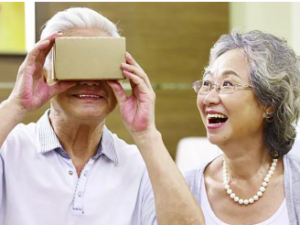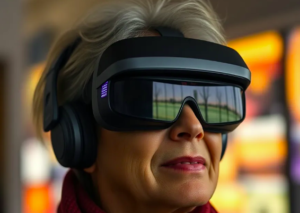
In the realm of healthcare, technological advancements have continuously revolutionized treatment approaches, particularly in addressing complex neurological conditions like Alzheimer’s disease. One such innovation that holds immense promise is the integration of augmented reality (AR) into Alzheimer’s therapy. Augmented reality, known for its ability to overlay digital content onto the real world, is now being leveraged to provide novel solutions for cognitive stimulation and therapy for individuals living with Alzheimer’s.

Alzheimer’s disease, a progressive neurodegenerative disorder, poses significant challenges for both patients and caregivers alike. It impairs memory, cognition, and the ability to perform daily tasks, gradually diminishing one’s quality of life. Traditional approaches to Alzheimer’s therapy have typically focused on medication and cognitive exercises. However, the emergence of augmented reality technology has opened up new avenues for more immersive and effective interventions.
Augmented reality cognitive stimulation offers a dynamic and interactive platform for individuals with Alzheimer’s to engage with therapeutic activities. By superimposing virtual elements onto the real world, AR creates a stimulating environment that encourages cognitive engagement and social interaction. This form of therapy can range from simple memory games to complex problem-solving tasks, tailored to the individual’s cognitive abilities and preferences.
One notable application of augmented reality in Alzheimer’s therapy is the development of specialized AR platforms designed specifically for this purpose. These platforms integrate cutting-edge technology with evidence-based cognitive interventions to deliver personalized therapy sessions. By harnessing the power of AR, these platforms offer a more engaging and immersive experience compared to traditional methods, enhancing motivation and participation among patients.
Moreover, augmented reality for Alzheimer’s extends beyond cognitive stimulation to encompass various aspects of therapy and support. For instance, AR can be used to create virtual environments that evoke positive memories and emotions, providing therapeutic benefits for individuals with Alzheimer’s. Additionally, AR-based cognitive therapy modules can target specific cognitive domains affected by the disease, such as memory, attention, and executive function, helping to slow down cognitive decline and improve overall cognitive functioning.
The integration of augmented reality into Alzheimer’s therapy also holds promise for remote monitoring and support. With the rise of telehealth and remote care solutions, AR technology can facilitate virtual therapy sessions and support networks for individuals with Alzheimer’s and their caregivers. This not only increases access to therapy but also promotes continuity of care and reduces the burden on caregivers.

Furthermore, augmented reality has the potential to enhance mental health outcomes for individuals living with Alzheimer’s disease. By providing engaging and interactive therapy experiences, AR can help alleviate feelings of isolation, depression, and anxiety commonly experienced by those affected by the disease. This holistic approach to Alzheimer’s therapy addresses both cognitive and emotional needs, improving overall well-being and quality of life.
In conclusion, the integration of augmented reality into Alzheimer’s therapy represents a paradigm shift in the treatment of this debilitating condition. Augmented reality cognitive stimulation offers a novel approach to engage individuals with Alzheimer’s in therapeutic activities, while specialized AR platforms provide personalized therapy sessions tailored to their needs. By harnessing the power of AR technology, we can transform Alzheimer’s therapy into a more immersive, effective, and accessible experience for patients and caregivers alike.