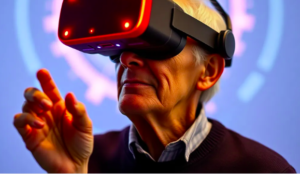
Alzheimer’s disease presents a formidable challenge for both patients and caregivers. As the most common form of dementia, it gradually erodes cognitive abilities, affecting memory, reasoning, and behavior. While there is no cure for Alzheimer’s, innovative approaches are continually being explored to improve the quality of life for those affected. One such promising avenue is the integration of augmented reality (AR) technology into cognitive therapy, offering new hope and possibilities in the battle against this debilitating condition.

Understanding Alzheimer’s Augmented Reality Therapy:
Augmented reality refers to the technology that overlays digital information onto the real world, typically viewed through a smartphone, tablet, or specialized AR glasses. In the context of Alzheimer’s therapy, AR provides a unique platform for delivering cognitive stimulation and support. By superimposing virtual objects, environments, or interactive tasks onto the user’s surroundings, AR creates engaging and immersive experiences tailored to individual needs.
Augmented Reality Cognitive Stimulation:
Traditional cognitive stimulation exercises often involve paper-based tasks or computer programs. While beneficial, they may lack the interactive and dynamic elements necessary to fully engage individuals with Alzheimer’s. AR addresses this limitation by offering interactive simulations and games that challenge cognitive abilities in novel and engaging ways. From memory games to virtual tours, AR applications provide a diverse range of activities designed to stimulate various cognitive functions.
The Role of Augmented Reality in Alzheimer’s Therapy:
Augmented reality serves as a versatile tool in Alzheimer’s therapy, offering several key advantages:
1. Personalized Engagement: AR applications can adapt to the user’s cognitive level and preferences, providing personalized experiences that cater to individual needs and abilities.
2. Real-World Context: By overlaying virtual elements onto the real world, AR therapy maintains a connection to the individual’s environment, promoting familiarity and relevance in cognitive exercises.
3. Multisensory Stimulation: AR experiences can incorporate visual, auditory, and even tactile stimuli, providing multisensory engagement that enhances cognitive stimulation and retention.
4. Remote Accessibility: With the rise of telemedicine and remote care solutions, AR therapy offers the potential for remote access to cognitive stimulation activities, enabling individuals to participate from the comfort of their homes.
5. Long-Term Monitoring: AR platforms can track user performance and progress over time, providing valuable data for caregivers and healthcare professionals to monitor cognitive function and adjust therapy accordingly.

Future Directions in AR for Alzheimer’s:
As research and development in augmented reality continue to advance, the potential applications for Alzheimer’s therapy are vast. Future developments may include:
1. Enhanced Immersion: Continued improvements in AR technology, such as more realistic graphics and immersive interfaces, will further enhance the user experience and therapeutic benefits.
2. Personalized Interventions: AI-driven algorithms could analyze user data to tailor AR therapy sessions to individual needs, optimizing effectiveness and outcomes.
3. Integration with Other Therapeutic Modalities: AR therapy may be combined with other approaches, such as music therapy or physical exercise, to provide comprehensive support for individuals with Alzheimer’s.
4. Widespread Accessibility: Efforts to make AR technology more affordable and user-friendly will increase access to Alzheimer’s therapy for individuals of all socioeconomic backgrounds.
Augmented reality holds immense promise as a tool for cognitive therapy in Alzheimer’s disease. By leveraging the power of immersive technology, AR platforms offer engaging and effective interventions to support cognitive function and quality of life for individuals living with this condition. As research and innovation continue to propel the field forward, the future of Alzheimer’s therapy may indeed be augmented.
In conclusion, Alzheimer’s augmented reality therapy represents a significant advancement in the quest to navigate the complexities of this devastating disease. By harnessing the capabilities of AR technology, cognitive therapy becomes more engaging, effective, and accessible, offering hope and support to those affected by Alzheimer’s and their loved ones.