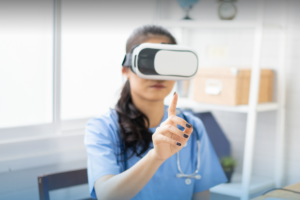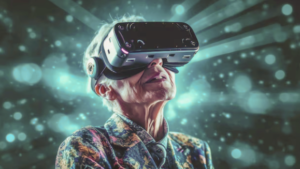
In the realm of healthcare, technological advancements are continually reshaping the landscape of treatment and care. One such innovation, augmented reality (AR), is emerging as a promising tool in the field of neurology, particularly in addressing the complex challenges posed by Alzheimer’s disease. This article explores the potential of augmented reality for cognitive stimulation in Alzheimer’s patients and its transformative impact on therapy and care.
Alzheimer’s disease, a progressive neurological disorder, is characterized by cognitive decline, memory loss, and impairment in daily functioning. Conventional therapeutic approaches aim to alleviate symptoms and slow down disease progression. However, the advent of augmented reality technology has opened up new avenues for enhancing cognitive stimulation and improving the quality of life for individuals living with Alzheimer’s.

Augmented reality cognitive stimulation offers a dynamic and immersive experience that engages multiple senses, thereby promoting cognitive function and neural connectivity. By overlaying digital information onto the real world, AR creates interactive environments tailored to the specific needs and abilities of Alzheimer’s patients. These AR environments can simulate familiar settings, such as a kitchen or a park, where individuals can engage in meaningful activities and exercises designed to stimulate memory, cognition, and problem-solving skills.
One groundbreaking application of augmented reality in Alzheimer’s care is the development of specialized AR platforms dedicated to cognitive therapy. These platforms leverage advanced technologies, including artificial intelligence and machine learning, to personalize the therapeutic experience for each patient. Through interactive games, puzzles, and simulations, individuals can engage in targeted cognitive exercises that adapt in real-time based on their performance and progress.
Furthermore, augmented reality therapy offers a non-pharmacological approach to managing Alzheimer’s symptoms, reducing reliance on medication and minimizing potential side effects. By integrating AR into comprehensive care plans, healthcare providers can offer a holistic approach that addresses both the physical and cognitive aspects of the disease.
The benefits of augmented reality for Alzheimer’s extend beyond cognitive stimulation to encompass emotional well-being and social interaction. AR environments can facilitate virtual socialization and communication, enabling individuals to connect with loved ones and caregivers regardless of physical distance. This virtual connectivity helps mitigate feelings of isolation and loneliness commonly experienced by Alzheimer’s patients, thereby improving overall mental health and quality of life.
Moreover, augmented reality has the potential to revolutionize traditional therapeutic interventions by providing remote access to cognitive stimulation programs. Through AR-enabled devices such as smartphones or tablets, individuals can engage in therapy sessions from the comfort of their homes, eliminating barriers to access and enhancing treatment adherence.

As the field of augmented reality continues to evolve, ongoing research and development are essential to optimize its efficacy and scalability in Alzheimer’s care. Collaborations between technology developers, healthcare providers, and researchers are critical to refining AR applications, validating their clinical effectiveness, and integrating them into standard care practices.
In conclusion, augmented reality represents a paradigm shift in the treatment and management of Alzheimer’s disease, offering innovative solutions for cognitive stimulation, therapy, and social engagement. By harnessing the power of AR technology, we can reimagine care for individuals affected by Alzheimer’s, empowering them to lead fuller, more fulfilling lives despite the challenges posed by the disease.