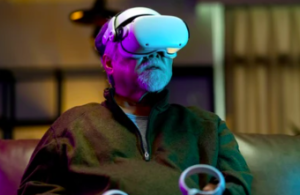
In the realm of healthcare technology, few innovations hold as much promise as augmented reality (AR). While often associated with gaming and entertainment, AR is emerging as a powerful tool in the fight against Alzheimer’s disease, offering new hope and opportunities for patients and caregivers alike.

Alzheimer’s disease is a progressive neurodegenerative disorder that affects millions of people worldwide, robbing them of their memories, cognitive abilities, and ultimately, their independence. Traditional treatments have focused primarily on medication to alleviate symptoms, but recent advancements in technology are opening up new avenues for therapy, particularly in the realm of cognitive stimulation.
Enter augmented reality – a technology that superimposes digital information onto the real world, creating an immersive and interactive experience. In the context of Alzheimer’s, AR holds immense potential as a cognitive stimulation tool, helping to engage and stimulate the brains of patients in ways that traditional methods cannot.
One of the key benefits of augmented reality cognitive stimulation is its ability to tap into the power of imagination. Studies have shown that Alzheimer’s patients often retain their imagination and creativity even as other cognitive functions decline. By leveraging AR technology, therapists can create virtual environments and experiences that harness this innate ability, helping patients reconnect with their memories and emotions in profound ways.
Imagine a world where a patient with Alzheimer’s can step into a virtual recreation of their childhood home, complete with familiar sights, sounds, and even smells. Through immersive storytelling and interactive activities, AR can help trigger memories and emotions that may otherwise remain dormant, providing a therapeutic bridge to the past.
But AR’s impact goes beyond mere reminiscence – it also offers practical benefits in terms of cognitive therapy. Augmented reality platforms designed specifically for Alzheimer’s patients can incorporate a variety of cognitive exercises and games, tailored to individual needs and abilities. From puzzles and quizzes to virtual tours and creative activities, AR therapy provides a holistic approach to brain stimulation, targeting memory, attention, and executive function.

Moreover, AR therapy can be easily adapted and personalized to suit each patient’s preferences and progression. As the disease advances, therapists can adjust the level of difficulty and complexity, ensuring that patients remain challenged and engaged throughout their treatment journey. This flexibility is crucial in addressing the unique needs of Alzheimer’s patients, who often experience fluctuations in cognitive function and mood.
In addition to its therapeutic benefits, augmented reality offers practical advantages in terms of accessibility and convenience. With the rise of mobile AR devices such as smartphones and tablets, patients can access AR therapy from the comfort of their own homes, reducing the need for frequent clinic visits and easing the burden on caregivers. This accessibility is especially valuable for patients with limited mobility or those living in remote areas with limited access to healthcare services.
Beyond its application in Alzheimer’s therapy, augmented reality has the potential to revolutionize mental healthcare more broadly. From anxiety and depression to PTSD and schizophrenia, AR technology can be used to create immersive therapeutic experiences that promote emotional well-being and psychological resilience. By harnessing the power of virtual reality exposure therapy, for example, clinicians can help patients confront and overcome their fears in a safe and controlled environment.
As the field of AR therapy continues to evolve, so too do the possibilities for innovation and discovery. From advanced cognitive stimulation protocols to personalized treatment algorithms, researchers and developers are pushing the boundaries of what’s possible with augmented reality, unlocking new pathways to healing and recovery for patients with Alzheimer’s and other cognitive disorders.
In conclusion, augmented reality holds tremendous promise as a therapeutic tool for Alzheimer’s patients, offering a unique blend of cognitive stimulation, reminiscence therapy, and practical accessibility. By harnessing the power of imagination and innovation, AR has the potential to reshape the landscape of Alzheimer’s care, providing new hope and opportunities for patients, caregivers, and clinicians alike.