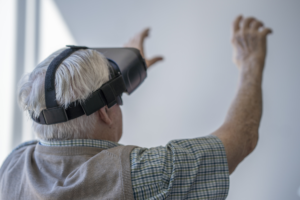
In the realm of healthcare, the intersection of technology and therapy is continually evolving, offering new avenues for addressing complex neurological conditions. One such condition is Alzheimer’s disease, a progressive neurodegenerative disorder that affects millions worldwide. Traditional approaches to Alzheimer’s therapy often involve medication and behavioral interventions. However, recent advancements in technology, particularly augmented reality (AR), have opened up promising possibilities for cognitive therapy.
Augmented reality, a technology that overlays digital information onto the real world, has garnered attention for its potential applications in various industries, including healthcare. When applied to cognitive therapy for Alzheimer’s patients, AR offers a novel approach to cognitive stimulation and mental health support.

Augmented Reality Cognitive Stimulation:
Augmented reality cognitive stimulation involves the use of digital interfaces to engage and challenge cognitive functions in Alzheimer’s patients. Unlike traditional cognitive therapy methods, which may rely on paper-based exercises or verbal prompts, AR provides a dynamic and interactive environment for cognitive engagement. For instance, AR applications can simulate real-world scenarios, such as navigating through a virtual environment or solving puzzles with increasing complexity.
Research has shown that cognitive stimulation through AR can lead to improvements in memory, attention, and overall cognitive function in individuals with Alzheimer’s disease. By integrating elements of gamification and personalization, AR cognitive stimulation programs can adapt to the individual’s abilities and preferences, creating a tailored therapeutic experience.
Augmented Reality for Alzheimer’s Therapy:
An emerging trend in Alzheimer’s therapy is the development of augmented reality platforms specifically designed to address the unique needs of patients and caregivers. These platforms often feature a range of AR-based activities and exercises aimed at enhancing cognitive abilities and promoting emotional well-being.
From memory games to virtual reality tours, these platforms offer a diverse array of experiences that cater to different cognitive domains affected by Alzheimer’s disease. Moreover, many AR therapy platforms incorporate social features, allowing patients to connect with peers, caregivers, and healthcare professionals in virtual environments.

Cognitive Therapy with AR:
Cognitive therapy with AR goes beyond traditional approaches by harnessing the immersive capabilities of augmented reality to create stimulating and engaging interventions. By combining elements of cognitive training, reality orientation, and multisensory feedback, AR therapy programs can provide a holistic approach to managing Alzheimer’s symptoms.
For example, AR applications can help individuals with Alzheimer’s practice daily living skills, such as meal preparation or household chores, in a safe and supportive virtual environment. Additionally, AR therapy sessions can be tailored to target specific cognitive deficits, such as memory impairment or executive dysfunction, allowing for personalized treatment plans.
Augmented Reality and Mental Health:
Beyond its application in cognitive therapy, augmented reality holds promise for addressing broader mental health concerns associated with Alzheimer’s disease. Virtual reality experiences, for instance, can transport patients to calming and immersive environments, reducing stress and anxiety levels.
Moreover, AR-based reminiscence therapy can evoke positive memories and emotions in individuals with Alzheimer’s, enhancing their overall quality of life. By leveraging the power of immersive technology, healthcare providers can offer innovative interventions that promote emotional well-being and social connectedness in Alzheimer’s patients.
In conclusion, the integration of augmented reality into cognitive therapy represents a groundbreaking approach to managing Alzheimer’s disease. By leveraging the immersive capabilities of AR, healthcare providers can create engaging and personalized interventions that target cognitive deficits and promote mental health.
From augmented reality cognitive stimulation to specialized therapy platforms, the possibilities for AR in Alzheimer’s care are vast and promising. As technology continues to advance, it is essential to explore and harness the potential of augmented reality to improve the lives of individuals affected by Alzheimer’s disease.